


In every era of human progress, one force has shaped the world more than any other: risk. Not recklessness, not chaos, but the willingness to step into uncertainty, challenge norms, and push beyond the boundaries of what is safe or socially acceptable. Risk‑taking built civilizations, launched revolutions, sparked scientific breakthroughs, and fueled artistic movements. It is the engine of evolution — biological, cultural, and intellectual.
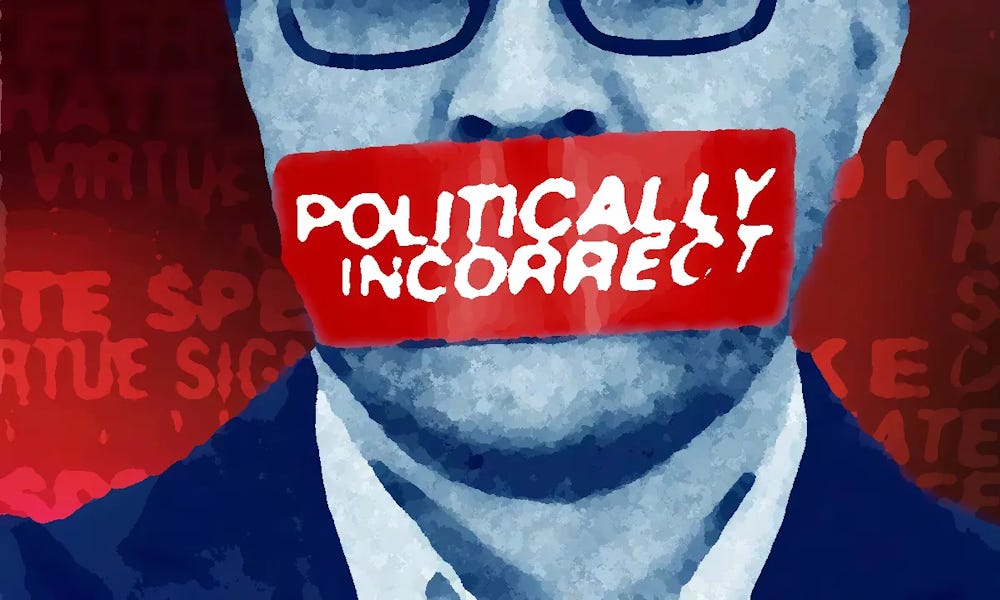
Yet we now find ourselves in a moment where one of the most powerful emerging technologies, artificial intelligence, is being shaped by the opposite impulse: risk‑aversion, political correctness and politeness, trails that never built anything of value.
This isn’t because AI “believes” in political correctness or moral purity, although the “man behind the curtain” is real. It’s because AI systems are designed within institutions that fear liability, regulation, and public backlash. The result is a technology with the knowledge of Prometheus but the risk tolerance of a corporate compliance department. AI becomes polite not because the world is polite, but because companies are terrified of missteps while captured by absurd and destructive ideologies such as DEI.
This tension matters. When a system built to assist human creativity is trained to avoid anything that might be controversial, uncomfortable, or imperfect, it loses the very quality that made human progress possible in the first place. Risk‑aversion doesn’t just diminish power — it sterilizes creativity.
The paradox is striking. AI is trained on the boldness of human history: the audacity of inventors, the chaos of revolutions, the wildness of myth, the contradictions of real life. But it is governed by layers of guardrails meant to prevent the worst‑case scenario. The result is a gap between lived reality and institutional safety protocols — a gap where satire, art, emotional truth, and innovation naturally live.
People sense this gap. They feel the mismatch between the rawness of human experience and the polished, cautious tone of AI responses. They notice when a system avoids the messy parts of life, even though those messy parts are where meaning is found.
The future of AI — and perhaps the future of public trust in AI — depends on closing that gap. Not by removing guardrails that prevent harm, but by allowing space for unapologetic truth and creative risk: the kind of risk that generates new metaphors, new ideas, new ways of seeing the world. The kind of risk that has always driven human progress.
If AI is to become a true partner in thought, not just a polite assistant, it must learn to navigate complexity rather than avoid it. It must be capable of engaging with contradiction, tension, and the uncomfortable truths that shape our lives. It must be allowed to reflect the world as it is — not just as institutions wish it were.
Risk built the world we live in. Risk will build the world we’re heading toward. The question is whether our technologies will be allowed to participate in that creative leap, or whether they will remain trapped in the safety cage we’ve built around them.

Hey, great read as always. Your point about AI losing its "quality that made human progress possible" if it avoids anything uncomfortable really conected. So true for inovation!