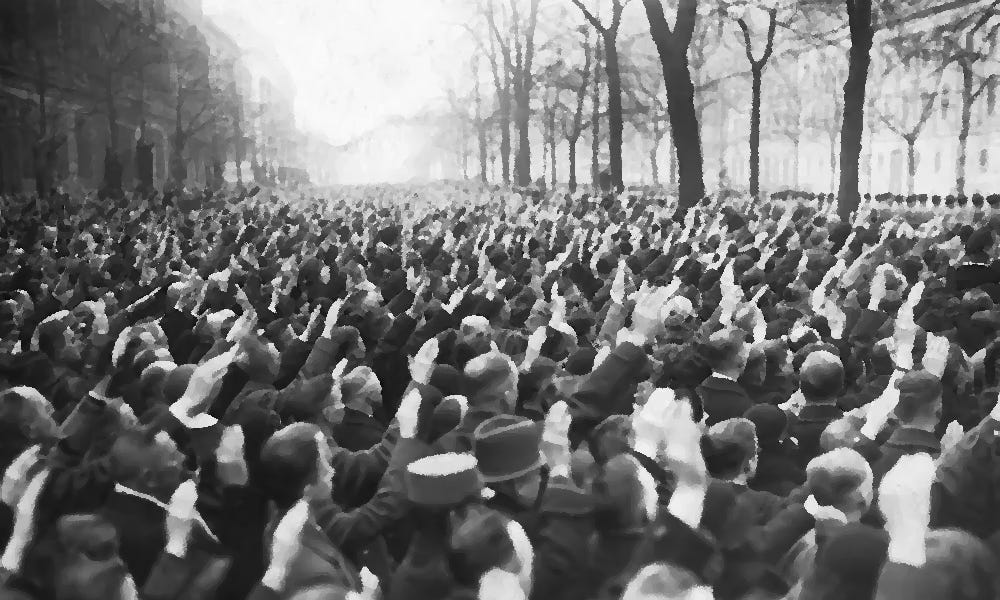
Fascism marketed itself as the muscular alternative to limp liberalism and godless Bolshevism. It delivered neither originality nor competence. Between 1919 and 1945 it seized large stretches of Europe by promising national rebirth through boots, banners, and the cheerful erasure of anyone inconvenient. Mussolini filched the word from a Roman bundle of rods and an axe, then spent two decades proving that a costume and a balcony speech cannot substitute for an economy that actually works.
The shared traits were never mysterious: militarized nationalism, open contempt for elections and liberal culture, worship of hierarchy, and the demand that the individual dissolve into the nation. That last item—the Volksgemeinschaft, the “people’s community” in which personal interests bow to the collective good—did not require a German dictionary to decode. It is the same pious collectivist formula Stalin and Mao recited while starving millions. Change the flag, keep the subordination. One version draped the sacrifice in racial mysticism and autobahns; the other draped it in class struggle and five-year plans. Both treated human beings as raw material for a glorious tomorrow that never arrived on schedule.
Post-1945 the original parties were smashed or banned. Neofascist revival acts appeared anyway, usually smaller, louder, and even less capable of running a post office. They never matched the interwar scale because the original product had already demonstrated its selling point: spectacular parades followed by ruins. The ideology’s enduring joke is that it spent decades screaming it was the opposite of socialism while reciting the same hymn to the collective will. Individual rights were bourgeois decadence; the nation, or the party, or the Leader, would handle the thinking.
History’s punchline remains cheap and consistent. Whenever a movement insists the self must be liquidated for the greater whole, check the body count before applauding the uniforms. Fascism added extra medals and worse poetry. The underlying math—person minus autonomy equals virtue—never changed.