


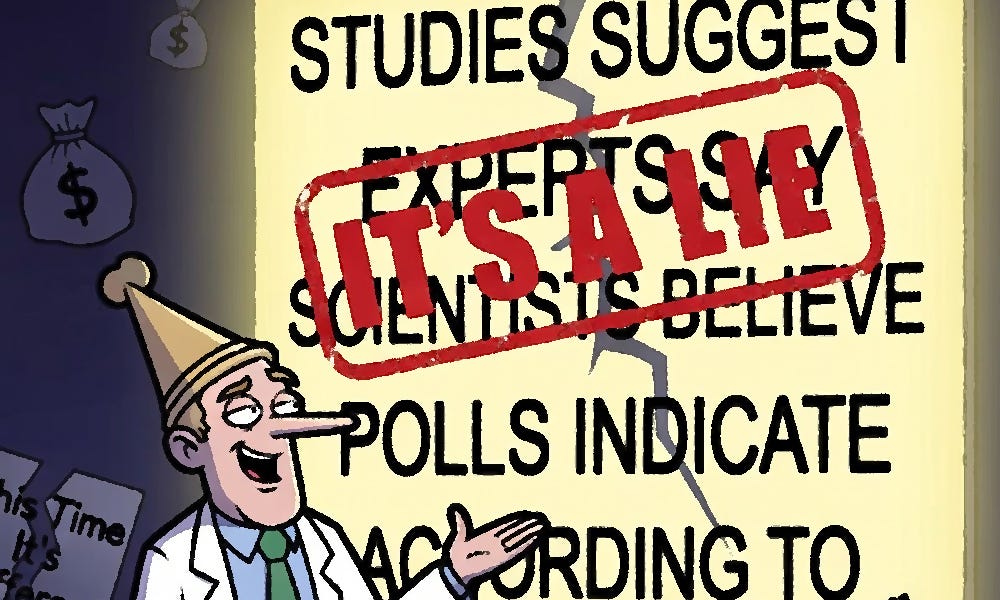
Must we respect the sacred incantations of our enlightened age? Whenever the narrative priesthood begins chanting “studies suggest,” “experts are saying,” or that golden oldie “according to research,” you can set your watch to the incoming avalanche of fragrant nonsense. It’s the verbal equivalent of a used car salesman kicking the tires while swearing on his mother’s grave that this rust bucket gets 50 miles to the gallon.
The pattern is as predictable as it is pathetic. Some policy needs selling—be it climate doomsday timelines that shift like goalposts in a hurricane, dietary guidelines that flip-flop harder than a politician in an election year, or the latest miracle social experiment guaranteed to fix society if we just ignore human nature. Out come the magic phrases. “Scientists believe.” “The majority of people agree.” “Polls indicate.” Translation: we’ve got a stack of cherry-picked data, funded by interested parties, interpreted by folks whose careers depend on finding the “right” result. Anonymous sources say it’s solid. Translation: trust us, bro.
The comedy writes itself. These aren’t humble seekers after truth; they’re high priests of the grant-funded echo chamber. Real science doesn’t need marketing slogans. When engineers say gravity works, they don’t poll the village or cite “experts believe.” Planes fly or they don’t. But for anything touching power, money, or control? Suddenly it’s all “according to research” from the same revolving door of institutions that swore eggs would kill you, then didn’t, then maybe, then definitely not. The majority of people believe... what their television tells them this week. Polls indicate the public supports whatever framing the pollster was paid to produce.
It’s not conspiracy; it’s incentives. Careers, funding, status, and institutional survival all reward consensus over uncomfortable reality. Dissenters get the heretic treatment—defunded, deplatformed, declared “anti-science.” The real tell? When the “studies” collapse under scrutiny, the experts never face consequences. They just issue a new set of studies suggesting the opposite, with fresh polls to back it.
