In the year 2000, Washington’s finest salesmen peddled Permanent Normal Trade Relations with China like miracle tonic. Open the floodgates, they cooed, and American jobs would bloom while consumers feasted on cheap imports. Factories would hum, towns would thrive, and every generation would climb higher. What a charming fairy tale.
Reality delivered a different script. Thousands of manufacturing plants shuttered as production sprinted overseas. Gen X watched parents’ stable careers evaporate while entire communities lost their economic spine. The “huge new markets” materialized—mostly for Chinese factories humming with outsourced American work. China dodged a Soviet-style reckoning, propped up by Western capital and know-how, while U.S. manufacturing towns absorbed the body blows.
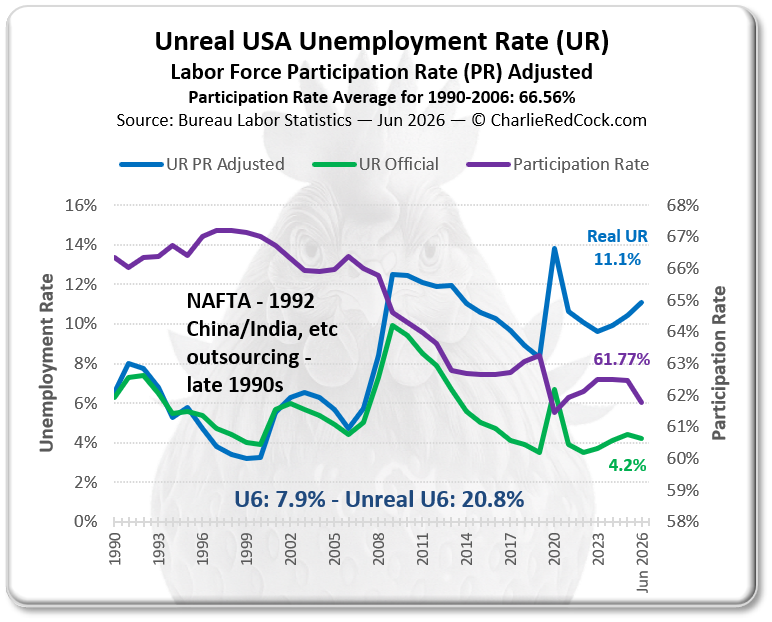
The numbers tell the sour joke. Labor force participation cratered as displaced workers vanished from official counts, inflating the gap between rosy “official” unemployment and the harsher adjusted reality. Meanwhile, public debt exploded from manageable post-war levels to towering mountains exceeding GDP, financing the very consumption that masked the hollowing out. By recent years, the debt-to-GDP ratio had climbed past 120%, a monument to deferred consequences.
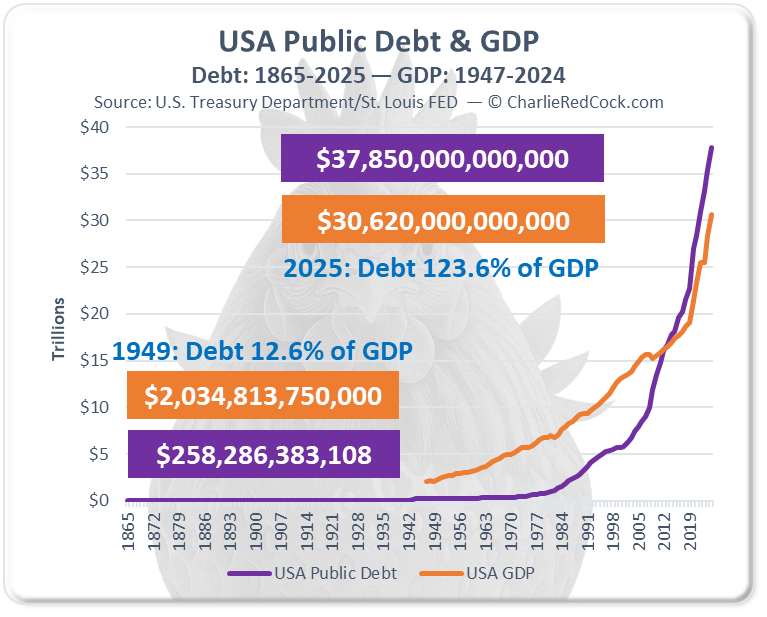
Politicians of both parties cheered the “free trade” gospel while communities paid the tab. The promised mutual prosperity became a one-way street: wealth concentrated elsewhere, losses localized here. Factories closed, skills atrophied, and debt piled higher to paper over the damage. The 2000 deal didn’t just reshape trade; it rewired America’s economic geography, leaving rusting legacies where vibrant towns once stood. Brilliant strategy—if the goal was exporting opportunity.