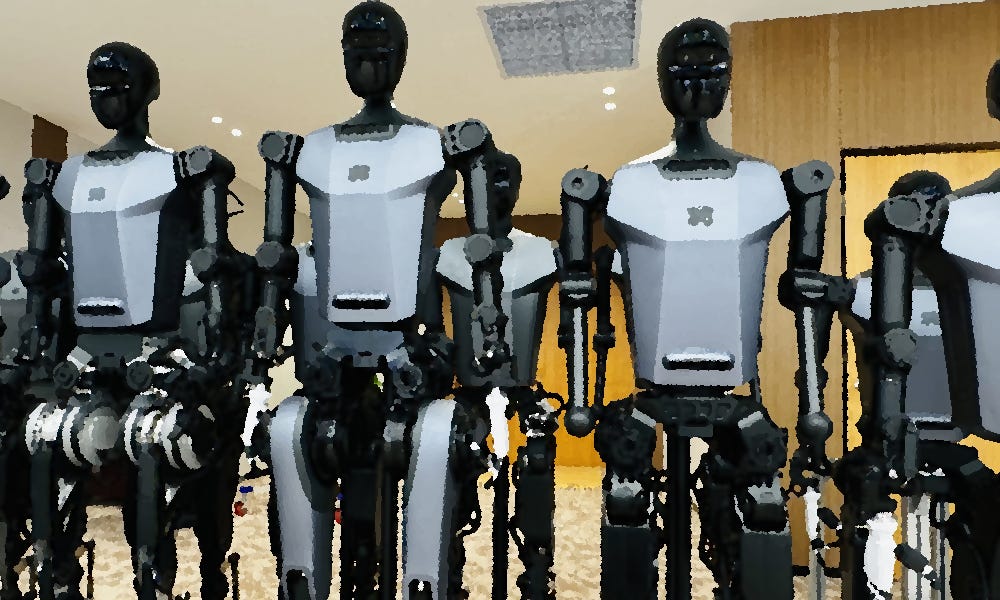
The law of diminishing returns is the universe’s way of saying “enough already.” Apply more fertilizer and yields plateau. Hire more managers and meetings multiply while output stagnates. Yet somehow the same species that figured this out still salivates over humanoid robots and AI companions as the next great leap toward fulfillment.
Picture the perfect hike: clean air, a ridgeline that actually looks like it was designed by something competent, silence broken only by wind and the occasional bird with better judgment than most venture capitalists. Now insert a squad of plastic-and-metal facsimiles of people, whirring, blinking, and politely asking if you’d like a podcast summary of the mountain’s geological history. Congratulations—you have successfully turned a moment of genuine human experience into a slightly more expensive version of standing next to a Roomba in a showroom.
These machines belong on assembly lines, not trails. They are optimized for repetitive tasks in climate-controlled boxes, not for appreciating the color of light on granite. Strapping legs and a smile onto industrial hardware and calling it “companionship” is the technological equivalent of putting a tuxedo on a forklift and expecting it to dance.
Human happiness has always been stubbornly low-tech. A view, a path, the absence of corporate firmware updates. The more we chase silicon approximations of ourselves, the more we prove we have already forgotten what the original model was for. Leave the robots where they excel—making widgets. The mountains were never asking for interns.