



Welcome to another thrilling episode of Wall Street: The Emotional Support Animal, where numbers are decorative, logic is optional, and the market moves according to vibes, moon phases, and whatever the last analyst had for breakfast. If you ever wondered why P/E ratios still exist, the answer is simple: comedy clubs need material, too.
And nothing illustrates this better than our dear friend Southwest Airlines, the patron saint of “profits down, stock up.” Yes, Southwest—the airline that spent the year watching its earnings fall like a tray table in turbulence—has somehow become the market’s golden child. Profits down 42%? Stock up nearly 24%. Because of course.
If you’re new to the stock market, here’s the rule: bad news is good news, good news is good news, and no news is a chance to speculate wildly. Financial textbooks call this “sentiment.” Normal people call it “delusion.”
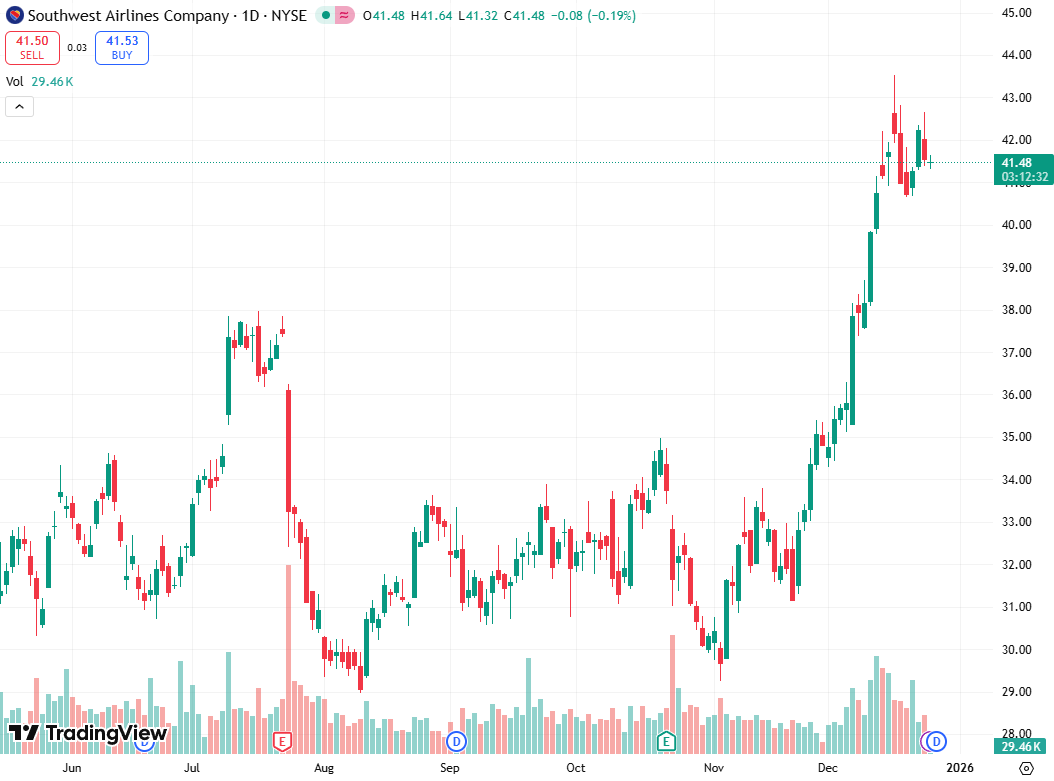
Southwest, bless its heart, has been busy reinventing itself. After decades of proudly offering open seating—a system that turned boarding into a polite stampede—they’ve decided to join the rest of the airline industry in the thrilling world of assigned seats. And naturally, Wall Street reacted as if Southwest had just invented teleportation.
Analysts practically levitated with excitement. “This is transformative,” they said, as though adding seat numbers and charging for legroom were breakthroughs on par with the moon landing. Meanwhile, Southwest quietly mentioned that demand dipped earlier in the year, tariffs didn’t help, a government shutdown didn’t help, and profits definitely didn’t help. But who cares about that when you can charge $80 for a seat that lets your knees breathe.
The airline even trimmed its 2025 profit expectations—again. But the stock? Oh, the stock soared like a Boeing 737 that actually got cleared for takeoff. Because investors aren’t looking at earnings; they’re looking at the promise of future earnings, which is basically the adult version of believing your dog will eventually learn to do your taxes.
And then come the analysts—the financial angels with X‑ray vision—who appear on cue to explain why the stock is doing what it’s doing. They speak with the confidence of surgeons and the accuracy of weather forecasters. “Clearly,” they say, “the stock is rising because of the initiatives.” Not demand. Not profits. Not reality. Initiatives. The magic word that means “we’re guessing, but it sounds official.”
Southwest’s CEO chimed in too, assuring everyone that assigned seating and extra legroom will generate a billion dollars next year. A billion. From seat numbers and a few inches of shin clearance. If that’s true, airlines should forget flying altogether and just sell legroom futures.
Barclays even upgraded the stock, predicting earnings per share that sound like they were pulled from a motivational poster. “Above $4 next year, over $6 in 2027.” Why? Because optimism is free and spreadsheets are patient.
And let’s not forget Southwest’s other “innovations”: eliminating two free checked bags (RIP), introducing basic economy (welcome to the party), and slowly morphing into the very airlines it once mocked. But hey—Wall Street loves a glow‑up, even if it’s just a new boarding policy and a fee menu.
So here we are: profits down, stock up, analysts glowing, investors cheering, and the rest of us wondering why we ever bothered learning what EBITDA means. The market has spoken, and the message is clear:
Financials are optional. Sentiment is king. And if you want to understand stock prices, don’t study accounting—study astrology.
