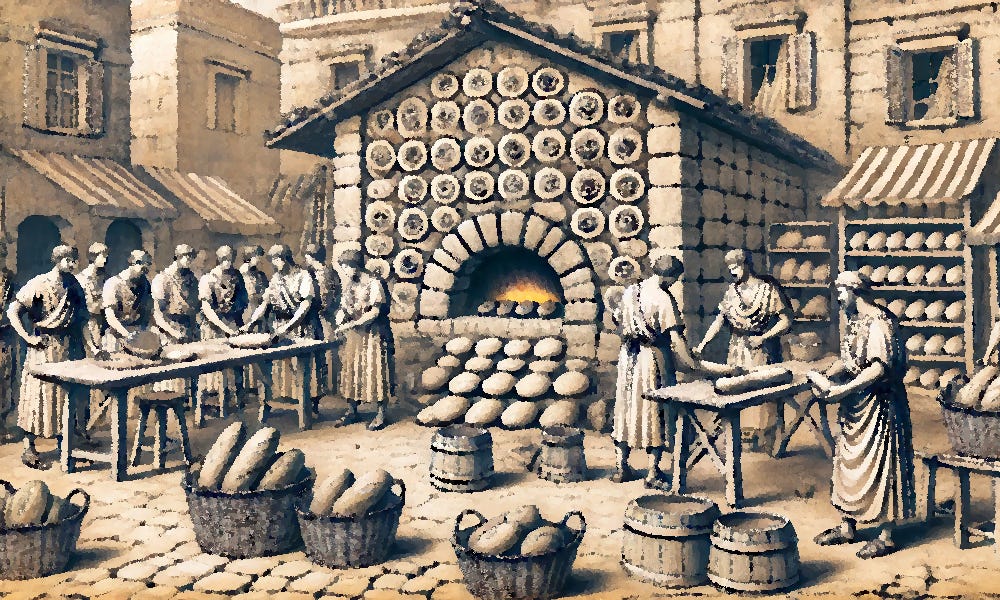
Rome’s free grain program started modestly enough. In 73 BC roughly 40,000 citizens collected their monthly handout. By 46 BC the line had stretched to 320,000. No visionary senator ever stood in the Forum and declared, “Fellow Romans, let’s addict a third of the city to state bread so we can own their votes forever.” It just happened the way these things always happen: one ambitious magistrate after another widened eligibility to buy applause. Each expansion made the next one feel normal. The man who once hid his ration ticket eventually waved it like a birthright, then organized to defend it.
Once the transfer exists, a permanent constituency is born. Recipients vote. Bureaucrats collect salaries for counting the recipients. Merchants who sell the state its grain develop a lively interest in never letting the contracts dry up. The political economy locks in tighter than a legionary’s armor. Julius Caesar, to his mild credit, audited the rolls and slashed them to 150,000. The Senate thanked him the traditional way—with knives. His successors, being less suicidal, let the numbers creep upward again.
The logistics were magnificent and ultimately fatal. Grain poured in from Sicily, Sardinia, and Egypt, paid for by taxes and the spoils of conquest. When the conquest machine finally sputtered, the obligation remained. Rome had written a check against future victories and the victories stopped clearing. Dependency had been distributed; so had the political power of whoever controlled the distribution. Reform became suicide.
The same mechanism explains why certain modern ideologues never tire of rediscovering the poor. Poverty is not a bug in their system; it is the feature that keeps the voting bloc loyal and the administrators employed. Solve the poverty and you evaporate the constituency. Margaret Thatcher put it more neatly than any classical historian: eventually you run out of other people’s money. Then you discover five people living in a mansion while five million quarrel over the crumbs that used to be free bread. The Romans learned this the hard way. We are still taking notes.