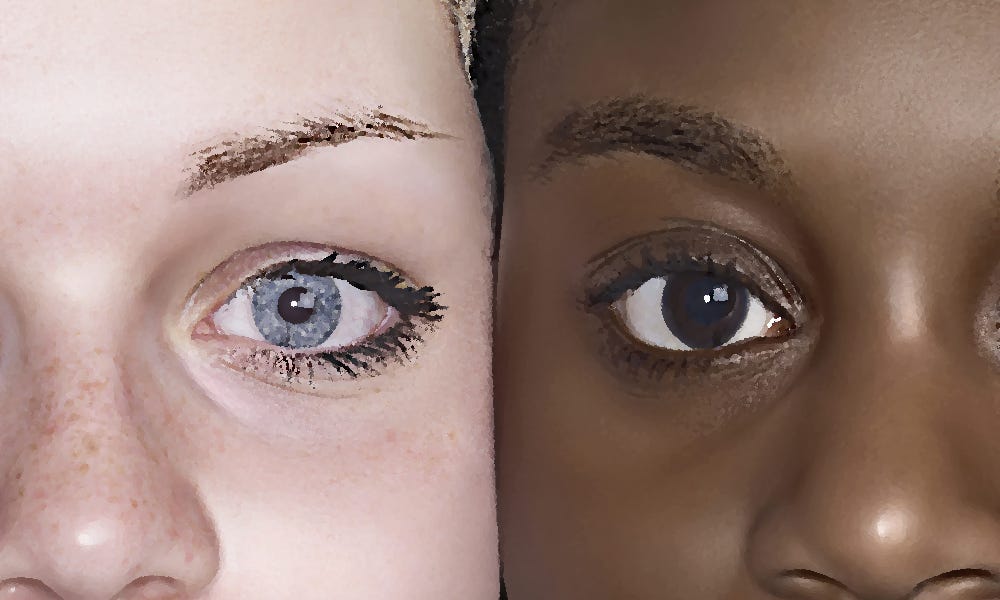
Pull up your pants, dear egalitarian. You’ve been chanting “we’re all the same” since the 1960s, convinced that exiting Africa was like stepping off a plane into a diversity seminar where biology politely waits outside. BOOM. A massive Harvard study just dropped, led by David Reich’s team, analyzing nearly 16,000 ancient genomes from West Eurasia over 10,000+ years. Natural selection didn’t yawn and retire after the Out-of-Africa migration. It hit the gas pedal—violently—once farming arrived in Europe.
Picture this: hunter-gatherers swap spears for plows, and suddenly evolution goes into overdrive. Light skin? Selected hard for vitamin D in cloudy Eurasian latitudes. Metabolism tweaks for new grain-heavy diets. Immunity updates against crowd diseases from livestock and villages. Even polygenic signals linked to traits like faster walking pace, lower body fat, and yes, educational attainment proxies (the study is careful, but the data isn’t shy). Hundreds of gene variants—479 independent loci—shifted frequencies post-agriculture. Selection accelerated, not slowed. The ancestors of modern Europeans weren’t just culturally evolving; their DNA was getting a bespoke upgrade under local pressures.
Meanwhile, in sub-Saharan Africa? Different continent, different story. No Ice Age exit, different pathogens, different diets, different population densities. Separate environments meant separate selection regimes. Evolution, that cheeky Darwinian process, kept tinkering everywhere. It didn’t freeze at the Sahara like some progressive force field. Recent, post-Out-of-Africa changes—skin pigmentation, lactose tolerance, disease resistance—prove human populations diverged genetically in the blink of evolutionary time.
The ideologues will scream “racism!” while clutching their pearls and ignoring the petri dish of data. “But culture!” they’ll cry, as if wheat farming magically equalized allele frequencies. Sorry, folks: biology doesn’t care about your feelings, your grants, or your social media sermons. Reich’s ancient DNA doesn’t lie—it watches selection in real time. Populations aren’t interchangeable widgets. Eurasians got one toolkit; Africans, shaped by their own pressures, got another.
This isn’t hierarchy; it’s reality with a side of sarcasm. Denying recent evolution is like claiming cars haven’t changed since the Model T because “we’re all driving.” Humans adapted. Deal with it. Science says what ideologues refuse: we’re different, and that’s interesting, not forbidden.