In the polished halls of Wall Street, buying a stock grants you a tangible slice of a company’s future—flawed executives, supply chain hiccups, and all. A bond offers a promissory note, a handshake sealed in legal ink that might still evaporate in bankruptcy court. Commodity futures? You get actual barrels of oil or bushels of grain, dirty and real. But Bitcoin? Ah, the revolutionary promise delivers nothing but a string of binary code, a shimmering illusion on a blockchain ledger that could vanish faster than a bad password or relocate to some digital exile on Uranus by dawn.
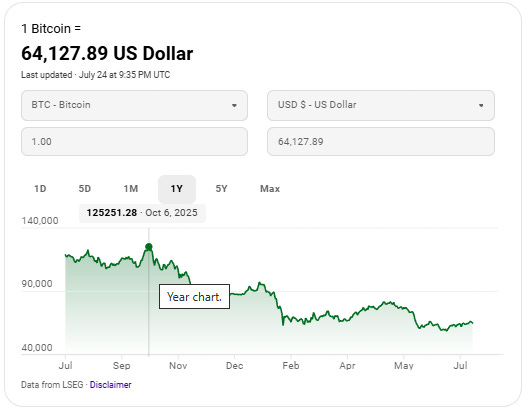
The provided chart captures the madness perfectly: hovering around $64,127 as of July 24, 2026, with the 1Y view showing roller-coaster volatility that would make seasoned traders reach for antacids. Peaks in late 2025 gave way to gut-wrenching dips, the kind that turn overnight millionaires into cautionary tales. Unlike cucumbers, whose price doesn’t swing 10% before lunch due to some whale’s tweet, Bitcoin’s “currency” status remains a joke. It fluctuates wildly, punishing holders and distorting everything it touches.
Speculation sells excitement, sure. Watching green candles pump your portfolio feels thrilling—until the crash wipes out half your savings while squirrels finish hoarding nuts for winter. Crypto enthusiasts tout decentralization and freedom, yet what freedom exists in assets that evaporate in hacks, rug pulls, or regulatory whiplash? Traditional markets carry risks too, but at least they rest on productive enterprise, not collective faith in unkillable code.
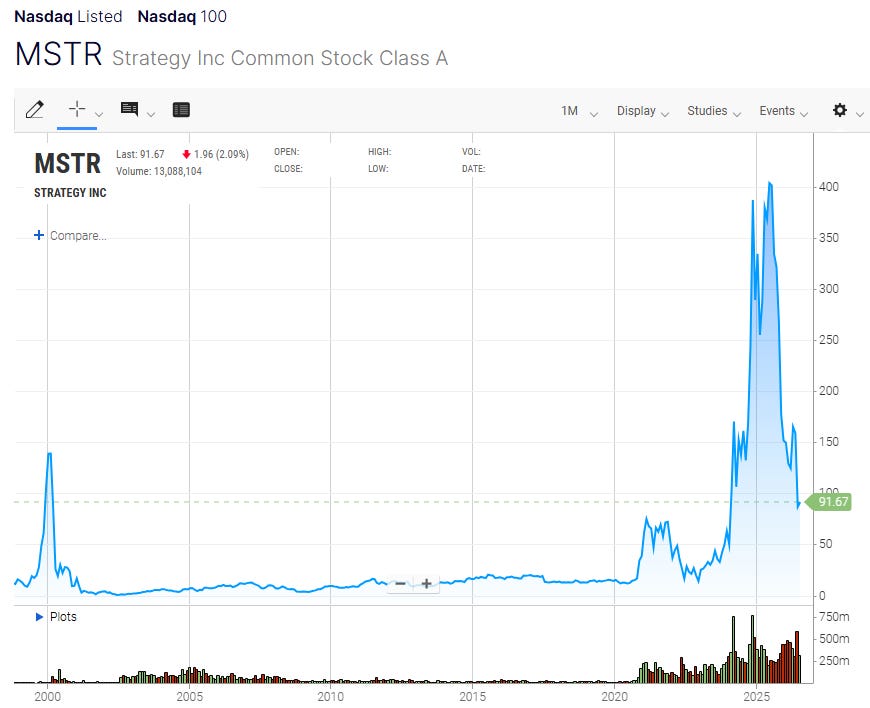
And then there’s Strategy, Inc.—the Bitcoin master play that peaked at “genius” and crash-landed at “whoops.”
Buyer beware: in this cryptic casino, entertainment often comes at the cost of your wallet’s dignity. Stick to assets with substance unless you’re betting the house on digital fairy dust.